

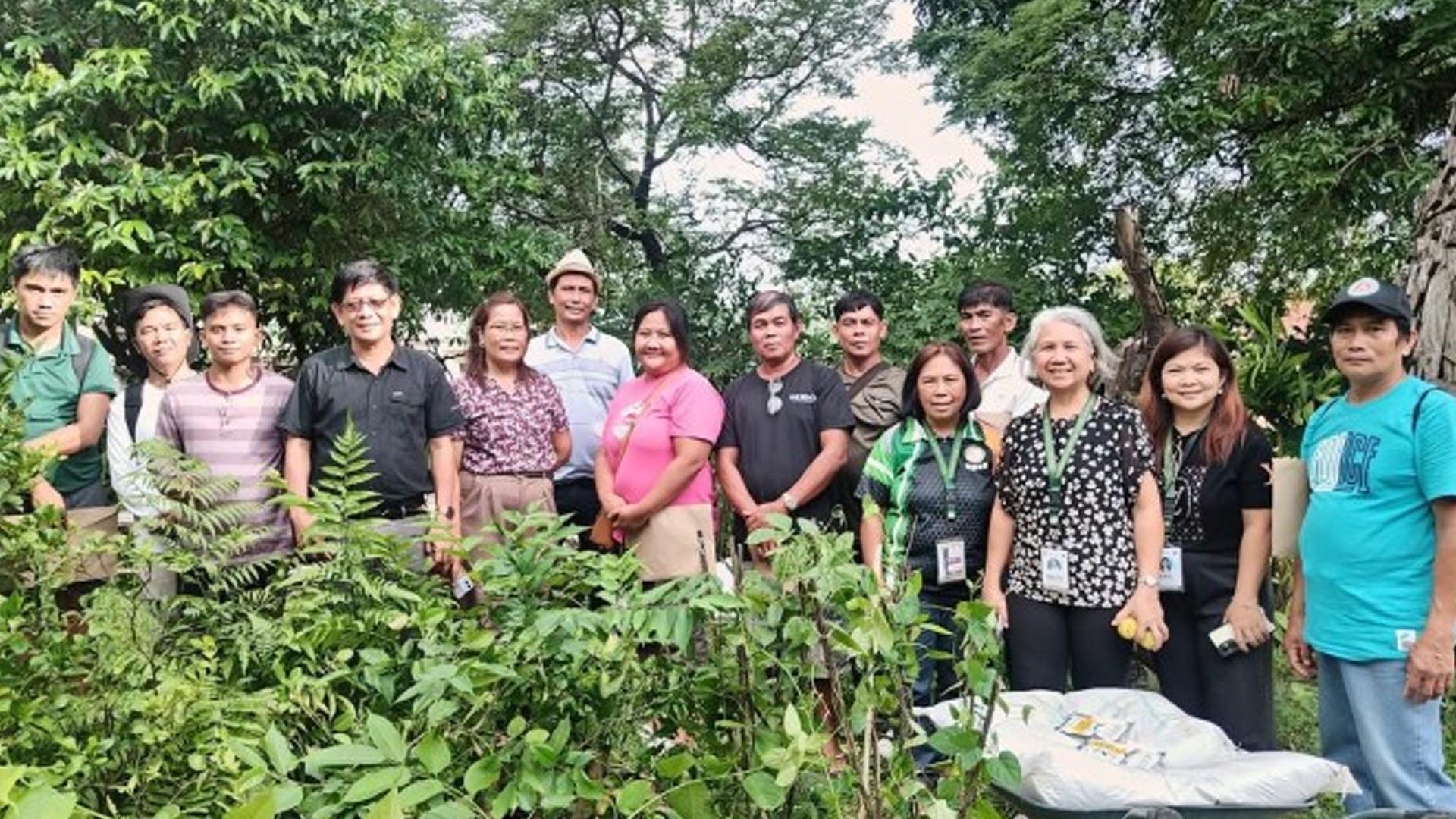






At least three farmers’ groups in the city of Batac and the municipality of Sarrat have vowed to ensure the preservation of indigenous plants for food and natural medicine.
With the help of state-run Mariano Marcos State University (MMSU), 15 participants from the Adones Integrated Farm, Romaine Organic Agriculture Farm, and Sarrat Farmers’ Association are now part of the ongoing establishment of its Community Foodscapes and Seedbanks of Ilocos Genetic Resources program.
“The Adones Integrated Farm values food sustainability and continuity of heirloom fruits and vegetables,” farm owner Bernadeth Adones said in a statement on Friday as she expressed full support for the program.
Among the indigenous food plants in Adones Integrated Farm are alokon (birch flower), sugod-sugod (momordica cochinchinensis), kapas-kapas (telosmaprocumbens), and pakpako (edible fern).
Farmer-engineer John Lei Ganiron of Romaine Farm told the Philippine News Agency on Friday that most of these indigenous food plants are seasonal and found in mountainous areas.
The propagation of these plants in the lowlands, he said, requires meticulous care, especially during the dry season.
“We can also grow them in a greenhouse but it could be costly,” he said.
Dr. Nathaniel Alibuyog, vice president for research, development, and innovation of MMSU, said indigenous food plants command a “high price” in the market for being seasonal and also because only a few farmers are growing them.
Alibuyog said he is hoping that through the program, more people will be able to appreciate the value of indigenous food plants not only for the preservation of culture but also to help boost food security and the income of farmers.
In a local study, MMSU identifies 46 indigenous vegetable species and food plants in Ilocos Norte that call for preservation and intervention lest they become extinct. (PNA)