

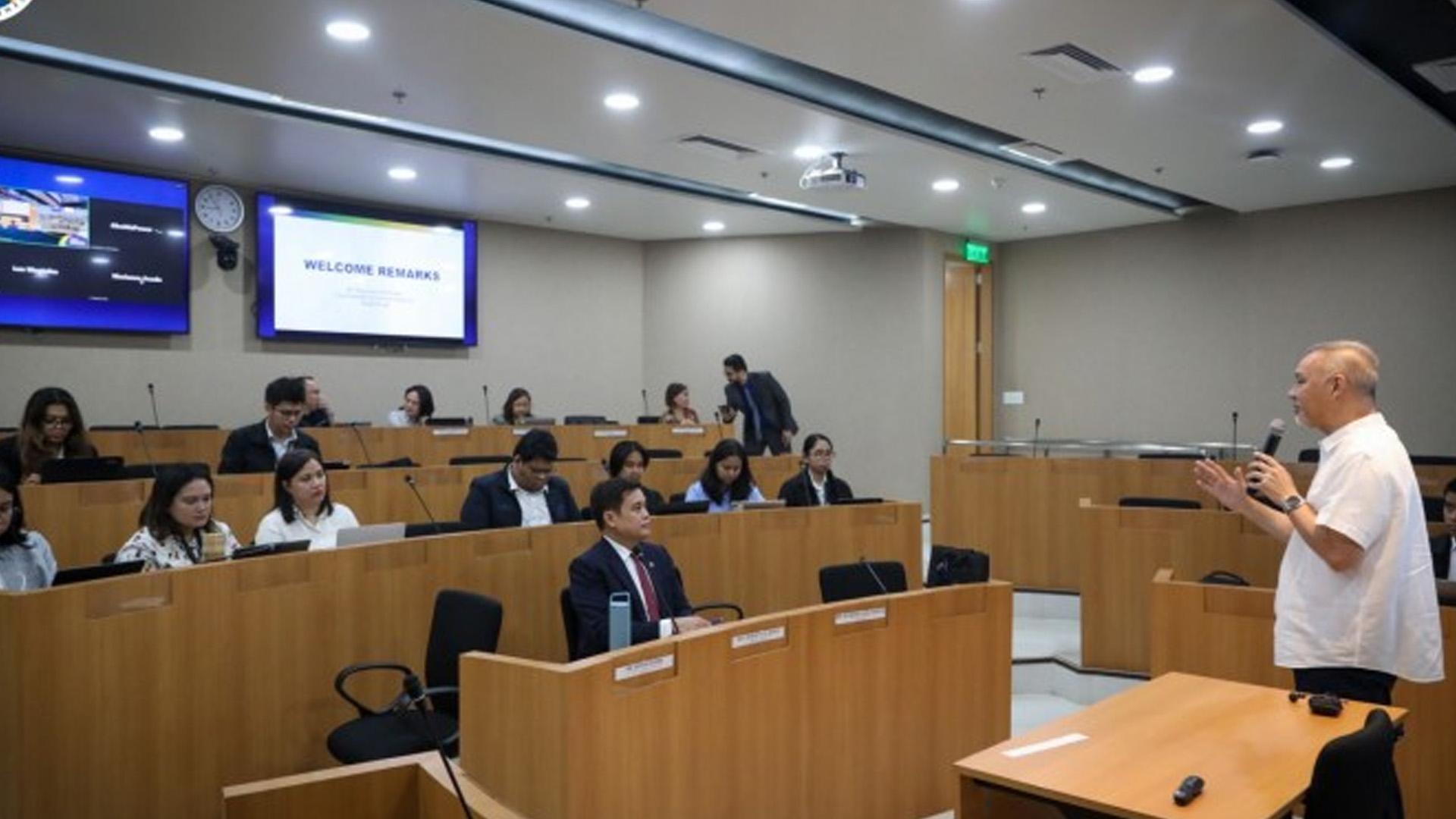






The Climate Change Commission (CCC) has underscored the significance of conducting continuous training as a vital strategic step in strengthening the country’s climate resilience.
In a news release on Tuesday, CCC Vice Chairperson and Executive Director Robert EA Borje shared the commission’s engagement in a series of capacity-building training to advance and strengthen climate action initiatives.
“Training is essential. At the Climate Change Commission, we highly value these learning opportunities because they equip the agency to face the climate-related challenges our country encounters, adopt new knowledge, and develop strategies as part of our climate response,” he said.
He added that as climate impacts grow more complex and urgent, the development of skills and knowledge is essential to crafting effective, adaptive climate policies.
Borje also cited the importance of recognizing that tackling climate change requires innovation, integration, and embedding continuous capacity building into the agency’s core mandate.
He said that through a series of focused programs, the CCC enhances internal systems and builds the backbone of effective climate governance.
“Take the Complete Staff Work (CSW) training, for example. This initiative improves coordination, analytical rigor, and institutional efficiency. It enables teams to move beyond reactive problem-solving and toward anticipatory, strategic planning,” he explained.
Meanwhile, Borje said that the Open Government Partnership (OGP) training helps enhance transparency and community engagement, while Power 101, a workshop that connects the dots between energy policy and climate resilience, deepens knowledge of the energy sector ,and empowers staff to help craft policies that promote efficiency, emission reduction, and support sustainable development.
He said each training initiative empowers the commission’s personnel to anticipate and address climate risks proactively rather than reactively.
“At its core, staff development prepares individuals to meet today’s complex challenges with clarity, competence, and confidence. We will remain committed to continuous learning and to improving our work, guided by the vision of President Ferdinand R. Marcos Jr. for a climate-smart and climate-resilient Philippines,” Borje said. (PNA)